Intentional living
Homa Atelier and the concept of "Less is More"
A question that I get asked time and again as Founder of Homa Atelier is why did I choose the aesthetics of minimalism and quietness when Indian handicrafts lends itself to bold colours, rich expressions and a plethora of decorative details.
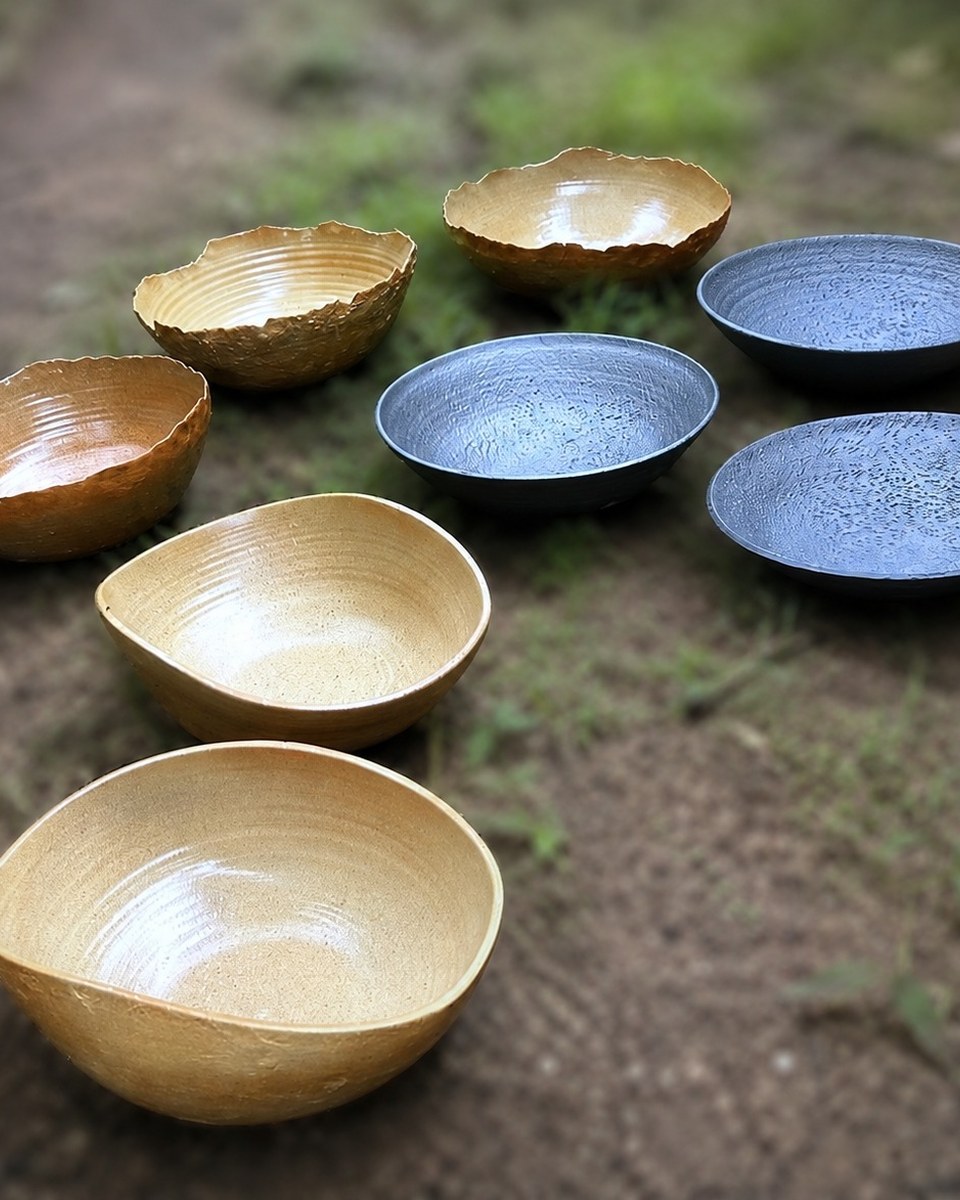
We are living in an age which constantly asks us to add more. Fill an empty wall. Refresh a room with the latest trend. There is always something new to acquire, another detail to perfect, another way to make our homes look more finished.
But what if the secret to a beautiful home lies not in what we add, but in what we choose to leave out? Less is more. Thoughtful restraint allows what matters to become more visible. In design, this is a deceptively simple idea. It asks us to look beyond the individual objects we love and consider the relationships between them. How they occupy space in relation to each other, interact with light, complement materials and contribute to the atmosphere of a room.
It asks us to understand that a beautiful object does not always need another object beside it, and that an empty space is not necessarily an opportunity waiting to be filled. Sometimes, the most considered design decision is knowing when to stop. When every element is competing for attention, what is actually standing out?
Every object we introduce into a room changes the experience of that space. A Bhujodi cushion can bring warmth and beauty to a favourite arm chair. A water hyacinth rug can act as a tactile anchor to a seating arrangement. A statement studio vessel can act as focal point on a coffee table. Each element making a valuable contribution. But when every corner, every wall is occupied with objects demanding attention, then the individual qualities of these objects often get lost in the overwhelm.
Restraint in design creates visual hierarchy, allowing the eyes to get guided by proportion and balance and settle on objects we want to showcase.
To me minimalism is not an argument for removing everything that is decorative. Rather, it is an invitation to be more deliberate about what we choose to see. Minimalism is often misconstrued to be monochromatic palettes, bare walls and austere interiors. Yet simplicity need not be cold, and restraint need not mean a lack of richness.
Some of the most compelling interiors derive their character from the materials themselves. The grain of natural wood. The softness of linen. The warmth of terracotta. The intricate texture of a handwoven textile. The subtle variations in colour and form that emerge from natural fibres and traditional craft. These materials offer visual and tactile complexity without requiring elaborate ornamentation.
A simple room can be extraordinarily rich when its materials invite us to look more closely and experience them through touch as well as sight. This is particularly relevant to handcrafted décor by Homa Atelier. The beauty of a handwoven mat or an artisan-made ceramic object is often found in the details of its making, in the texture, in the variation and in the imperfection that holds the evidence of the human hands. Sometimes, the most effective way to celebrate an object is to give it room to breathe.
The Japanese aesthetic philosophy of wabi-sabi offers a complementary perspective. Here minimalism focuses on simplicity, clarity and restraint, wabi-sabi encourages an appreciation of imperfection, impermanence and the natural character of materials. Together, these sensibilities help create spaces that are understated yet deeply expressive.
There is another reason why the idea of less is more feels increasingly relevant. Home décor has become part of a cycle of constant renewal. Trends change, products are replaced, and familiar spaces are repeatedly reimagined in the pursuit of something new.
But a home need not be perpetually updated to remain beautiful. The discipline of 'less is more' lies in distinguishing between what genuinely enriches our lives and what merely occupies space. It is not about owning the fewest things. It is about allowing the right things to matter.
At Hōma Atelier, we are drawn to objects that contribute something lasting to the experience of a home. Natural materials, Organic forms. Handcrafted details. Textures that invite touch. Pieces that feel considered thoughtfully rather than conspicuous. We believe that home décor should not simply fill a room or follow a trend. It should help shape the atmosphere in which everyday life unfolds.
For me, one of the most exciting possibilities of this philosophy lies in its relationship with Indian craftsmanship. Minimalism does not have to mean erasing colour, culture or ornament. Nor should it require us to reproduce the same neutral interiors seen everywhere in the world. Indian craft traditions offer an extraordinary vocabulary of materials, textures and techniques. These objects can sit comfortably within restrained contemporary interiors, bringing cultural identity and human craftsmanship into a simple composition.
A woven runner can make a table feel more considered. A handcrafted lamp can change the mood of an evening. A ceramic vessel can bring warmth to an otherwise quiet corner. None of these objects needs to dominate a space. Their value lies in what they contribute to the whole.
When we become more selective about what we bring into our homes, we begin to notice what is already there. The light, the materials, the spaces between objects, and the simple pleasure of living with things we genuinely value.
Perhaps that is the real meaning of less is more. A home where less distraction allows more meaning. Visual quietness replaces overwhelm of senses and draws attention to what character and beauty one wants to highlight in a home.